






















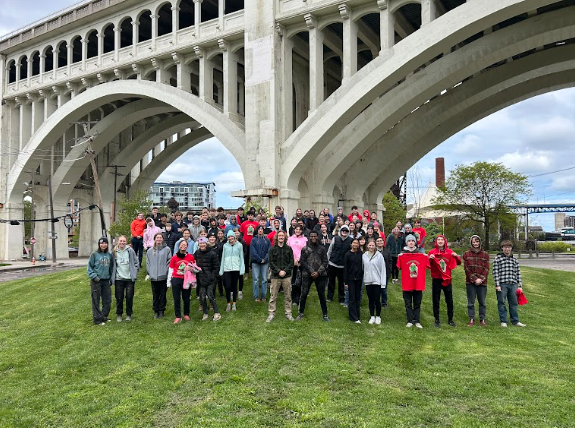









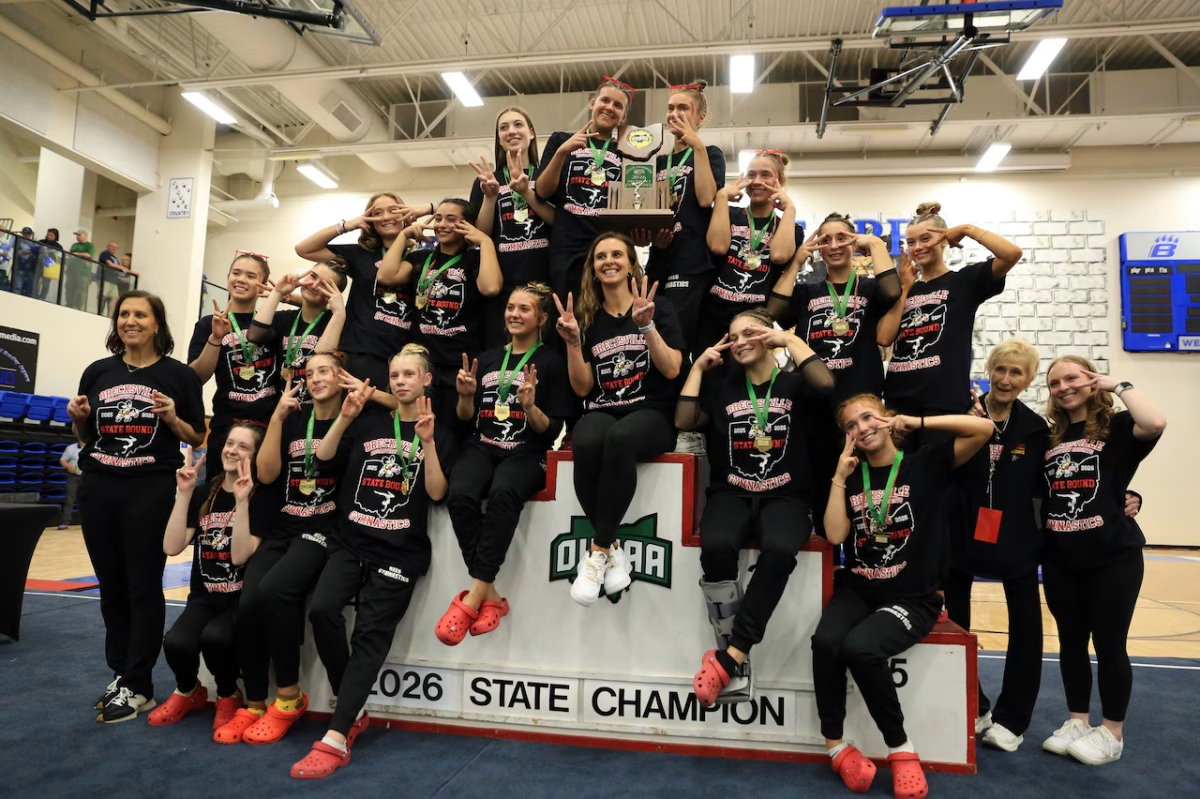





With more than 140 athletes on the roster, the Brecksville-Broadview Heights High School track and field team is one of the largest athletic programs at the school. As the snow melts and the outdoor season begins, runners, throwers, and jumpers are already hard at work preparing for months of competition.
This year the team consists of 80 girls and 62 boys. With the season beginning on Wednesday, February 25, it is very similar to previous years. The boys team is led by head coach Robert Schank, while the girls team is led by head coach Dawn Ferrante. Alongside them, Coach Lev, Coach Wilson, Coach Dubasak, and others assist with more specialized events.

Every day after school, the track team is hard at work. From 3 pm to 5 pm, athletes engage in training designed to strengthen their skills. For many athletes, preparation for the season began long before the official start of the season.
At the high school, indoor track is offered as an opportunity for athletes to work with coaches and get into shape before the regular season begins. This program also provides multiple opportunities to compete and qualify for higher-level competitions. During the indoor season, athletes compete at Spire Academy in Geneva, Ohio.
Indoor States
This year, several athletes even qualified for the state meet, including the girls’ 4x800m relay (four girls each running 800 meters, typically two laps around a standard track) and the boys’ 4x400m relay (four boys each running 400 meters, typically one lap). The state meet took place at Spire Academy in Geneva, Ohio, with some events even beginning during the school day, requiring some athletes to miss classes.
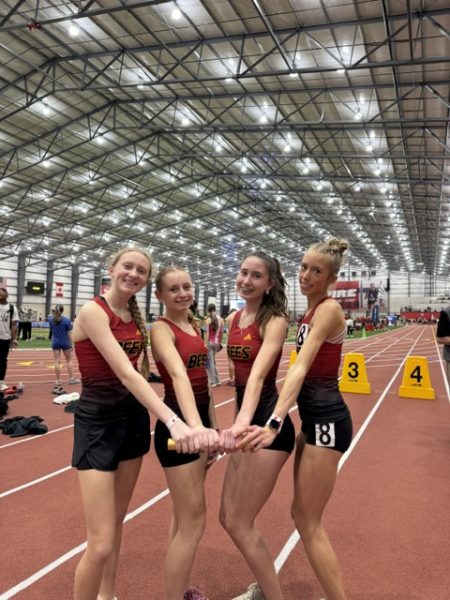
At states, the girls finished with a time of 10:05, placing 12th and nearly breaking the school record. The team, consisting of senior Sydney Speeth (first leg), sophomore Annelies Chase (second), junior Anna Brobst (third), and sophomore Anna Costin (fourth), is currently second on the school record list and is looking forward to improving and continuing their progress during the outdoor season.

For the boys, the 4x400m relay team finished 11th with a time of 3:31.30. The team consisted of senior Jacob Eterovich, sophomore Deacon Toth, freshman Edison Beach, and senior Brody Larkins.
As the outdoor season begins, both coaches and athletes are hard at work. For coaches, finding new training techniques and ways to strengthen runners both mentally and physically is essential. Because track includes a wide variety of events, athletes typically split into groups during practice to focus on their events and develop techniques that play a major role in them.
These groups generally include distance runners, who focus on longer races and often also participate in cross country; sprinters, who focus on shorter distances and speed; and field athletes, who compete in events such as throwing, jumping, and pole vaulting.
Distance
For distance runners, mileage is crucial. In a typical week, athletes run between 20 and 30 miles, which is equivalent to about 80 to 120 laps around a standard track. Their weekly training often includes long runs (5+ miles), workouts such as 1600m repeats or shorter intervals for speed, and easier runs of 3 or more miles.
Many athletes on the distance team also compete in cross country. For many runners, endurance is their strength, making distance events a natural fit. The distance group primarily competes in races such as the 800m (2 laps), 1600m (4 laps), and 3200m (8 laps).

Many distance runners have been involved with the sport since a young age. For example, sophomore Nathan Petras has been part of the program since middle school. His dedication to the sport is clear, as he explains that he finds the motivation to consistentently attend practice because of the benefits he sees in his physical health.
The dedication to improving oneself while also supporting the team is a major part of track. Although running is often considered an individual sport, Petras explains that “track can be a big commitment because I know I need to be there for myself and the team”, highlighting the importance of teamwork within the program.
Similar to Petras, sophomore Tyler Roth has also been running for many years, beginning in elementary school. For Roth, getting through long weeks and tough workouts can be challenging, but he motivates himself by reminding himself that “if other people are doing the same workouts as me, and if they can get through it, why can’t I” For many athletes like Roth, staying motivated can sometimes be difficult, especially on days when they do not feel like running.
For others, track is a way to stay in shape for another sport. Freshman Lauren Mauser shares that she primarily focuses on soccer in the fall while utilizing track in the spring to stay in shape. However, she also notes that “track has allowed me to make many friends and spend time with them”.
The distance group is primarily coached by Schank, a former distance and cross country runner. Schank has been coaching since 1983, giving him a lot of experience. Over the years, he has worked with many talented athletes. Throughout the season, he says it is rewarding to watch athletes “grow not only in their athleticism, but also as a person”.
As training methods are continuing to change and evolve, coaches like Schank have adopted new drills. One of these including exercises using resistance bands to strengthen hips and other muscle groups. Schank notes that these exercises help significantly reduce the amount of injuries throughout the season.
Running is not only physically demanding but mentally demanding as well. For coaches, constantly finding ways to encourage and motivate athletes is challenging. In order to do this they work to encourage athletes to give their best effort while maintaining a supportive evnrionment and team.
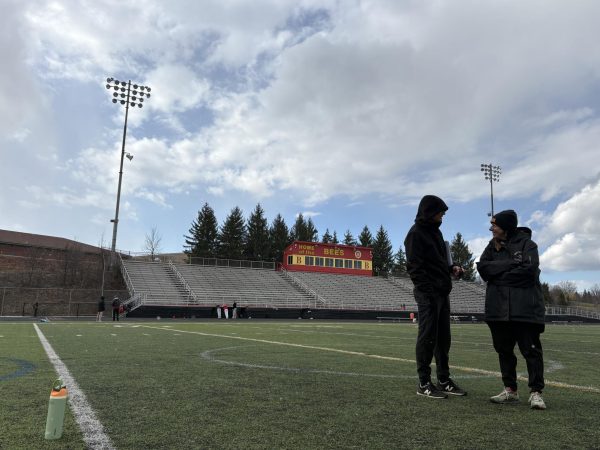
Schank explains that many student-athletes struggle with balancing athletics with other commitments such as academics. Many athletes in the program take very demanding courses such as AP classes, which can lead to stress. “They get too overwhelmed, and they get stressed out,” he says.
Many athletes sacrifice sleep to prioritize academics and complete assignments. However, a lack of sufficient sleep can prevent proper recovery. This often leading to fatigue, illness, and sometimes even injury.
Sprints

The track team also includes a large group of sprinters. This group focuses on shorter races, usually one lap around the track or less, as well as hurdles.
Ferrante, the girls’ head coach and hurdles coach, has been heavily involved in the program. Like Schank, she also participated in track during high school and college. Now she is bringing her experience and expertise to the high school level. She has coached track for 14 years.
For Ferrante, one of the most rewarding parts of coaching is the relationships you build with the athletes. “Just to see success in their eyes, even if they are not the fastest kid, they are so proud of themselves,” she says.
Watching athletes improve throughout the season and achieve their personal goals is what makes track exciting for many coaches. In training, Ferrante (who specializes in hurdles) emphasizes bringing efficiency to jumping over the hudle. She like many other coaches uses drills to improve technique.
Throughout the season Ferrante looks foward to seeing improvement in times. She encourages positivity on the team. “I tried to tell them they’re doing good things, and eventually their times will drop. They just have to focus on different things and not as much on time,” Ferrante explains.
Sophomore hurdler Lianna Fallon is looking forward to the outdoor season. She helps keep herself motivated during difficult workouts by “thinking about how much my future self will thank me because I will improve in the end” she explains.
Balancing track with other commitments and responsibilities can sometimes be challenging. Fallon says, “Sometimes I have scheduling conflicts, or I feel unmotivated to run,” but despite this, she continues to work hard to improve both her endurance and speed.
Senior sprinter Haeley Massello got involved in track her freshman year after influence from friends who encouraged her to get involved in school activities and the community. Over the years, she has become strong in the shorter distance races such as the 200m (1/2 lap) and 400m (1 lap).
This year, Massello sets goals with hopes to break 60 seconds in the 400m and try new events such as the 800m (2 laps). She says meeting so many people through the program motivates her to keep showing up. Massello maintains the mindset that “it has to come to an end eventually and will make me stronger. I have to appreciate the hard parts because that is what is making me better”.
Sophomore sprinter Niko Papadatos originally joined track as a way to stay in shape during the off season for football. Competing in the 110m and 300m hurdles, he first got involved in seventh grade for fun.
This season, Papadatos hopes to lower his PRs (personal records) by a second in each event. He also hopes to potentially qualify for higher level meets such as districts. Like many athletes on the team, he focuses on maintaining a positive mindset during difficult workouts. “I know it is going to be over anyway, and I should work hard,” he says.
Field
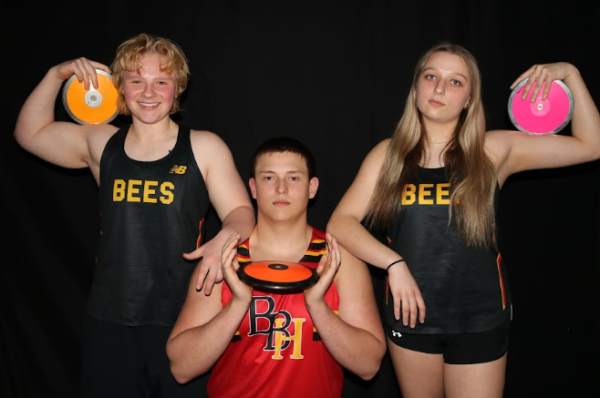
In addition to running events, track also includes several field events. These athletes compete in events such as long jump, high jump, pole vault, and throwing events.
Rather than primarily focusing on speed and endurance like the sprinters and distance runners, field athletes emphasize gaining strength, technique, and power.
Throughout the season, coaches track times and results using spreadsheets to monitor personal records and measure improvement. This organization allows both athletes and coaches to see progress throughout the season.

New Jerseys


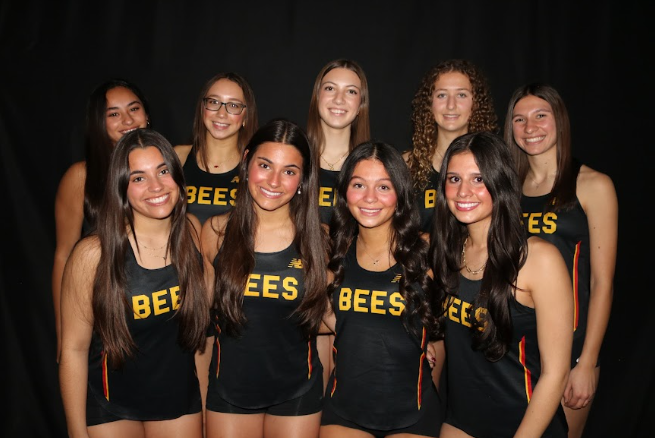
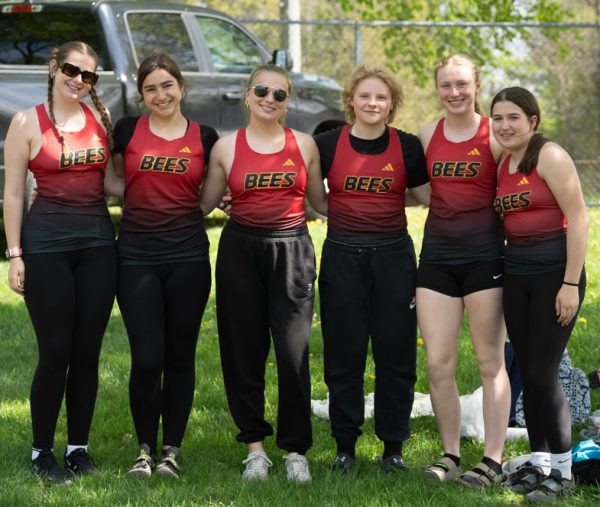
This year, the track team also introduced and upgraded to new jerseys. Previously, the uniforms featured red at the top fading into either black (for girls) or gray (for boys). This new design is very different, with the girls wearing black jerseys and the boys wearing red jerseys.
Aside from running, athletes build close bonds with each other, making many memories. For them, track is more than just a sport, but also where they have had some of their best experiences. Lianna Fallon, sophomore reminisces on memories such as “in middle school, the girls’ team collectively decided to play a prank on one of our coaches, where we all fainted in front of her, and it was very funny.” Whereas freshman Lauren Mauser shares fond memories, such as watching slime ASMR at meets to pass the time.
For many athletes, track is not just about running or competing, but also about friendships, memories, and personal growth. This season, the Brecksville-Broadview Heights High School track team is entering the competitive season well prepared and looking forward to success. Despite losing several graduated talented athletes from last year, the program is ready to rebuild and remain competitive as always.
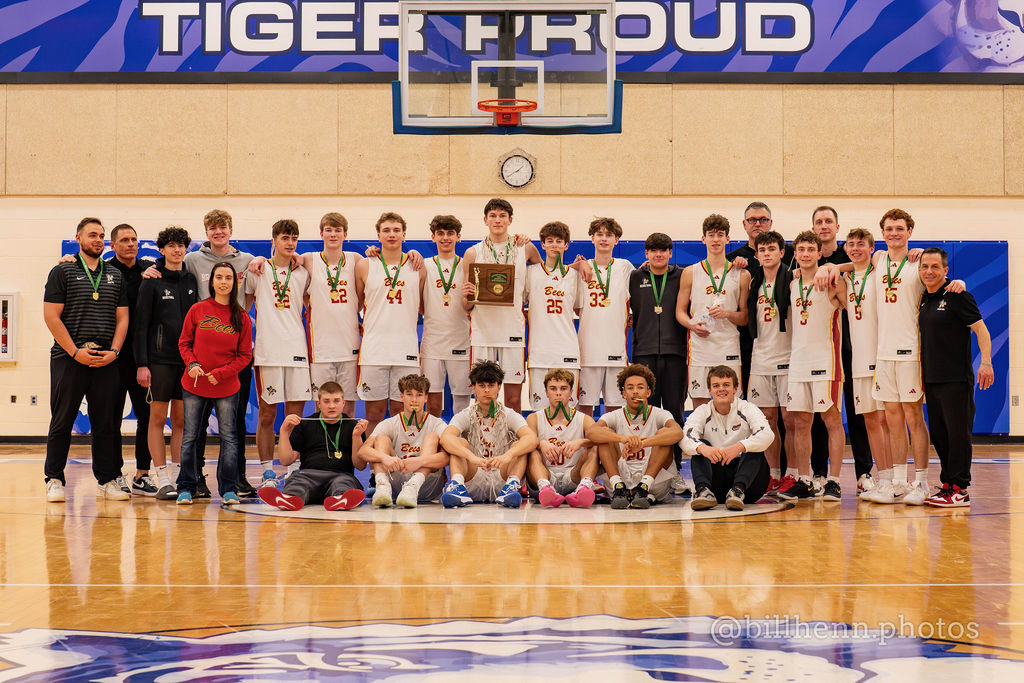
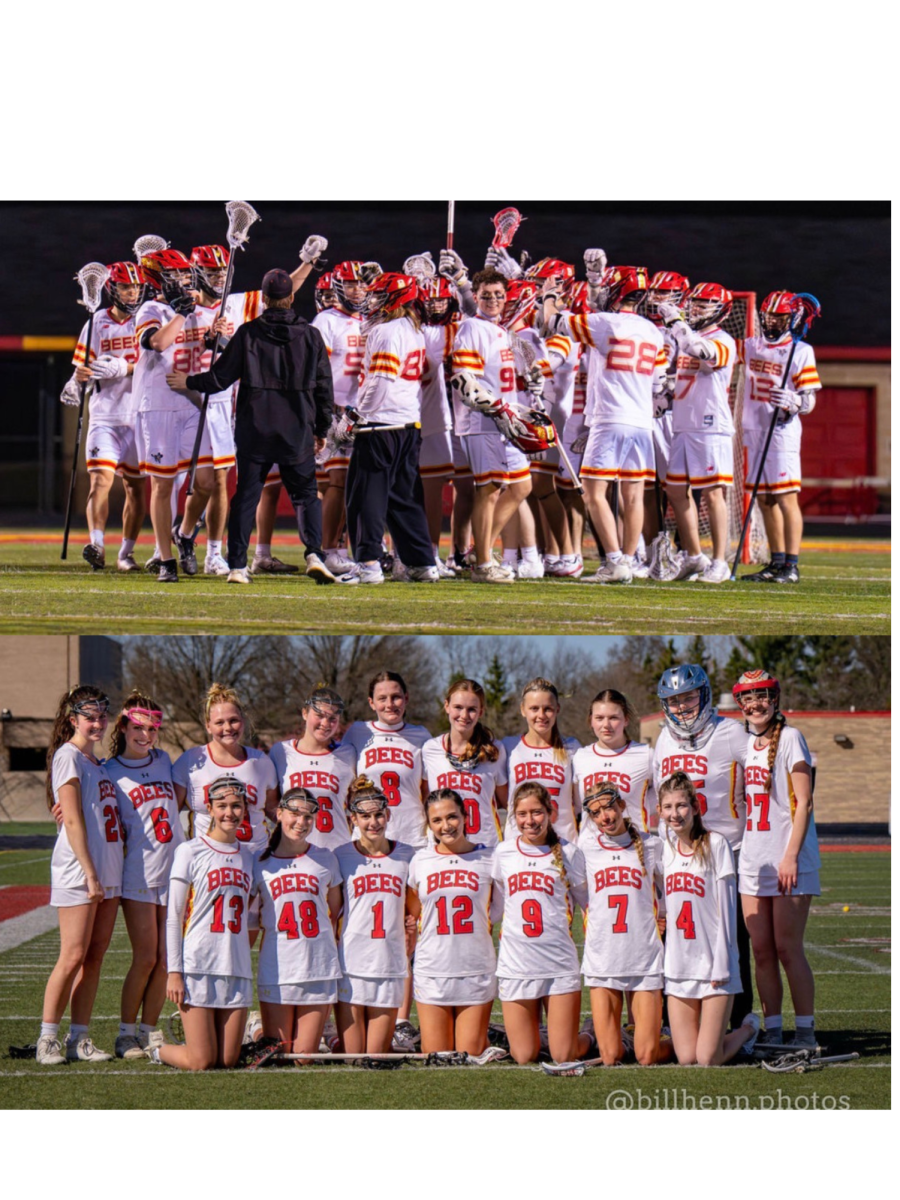
Attached below are some of the phtoos taken at the media day pictures 2026.
Media day photos