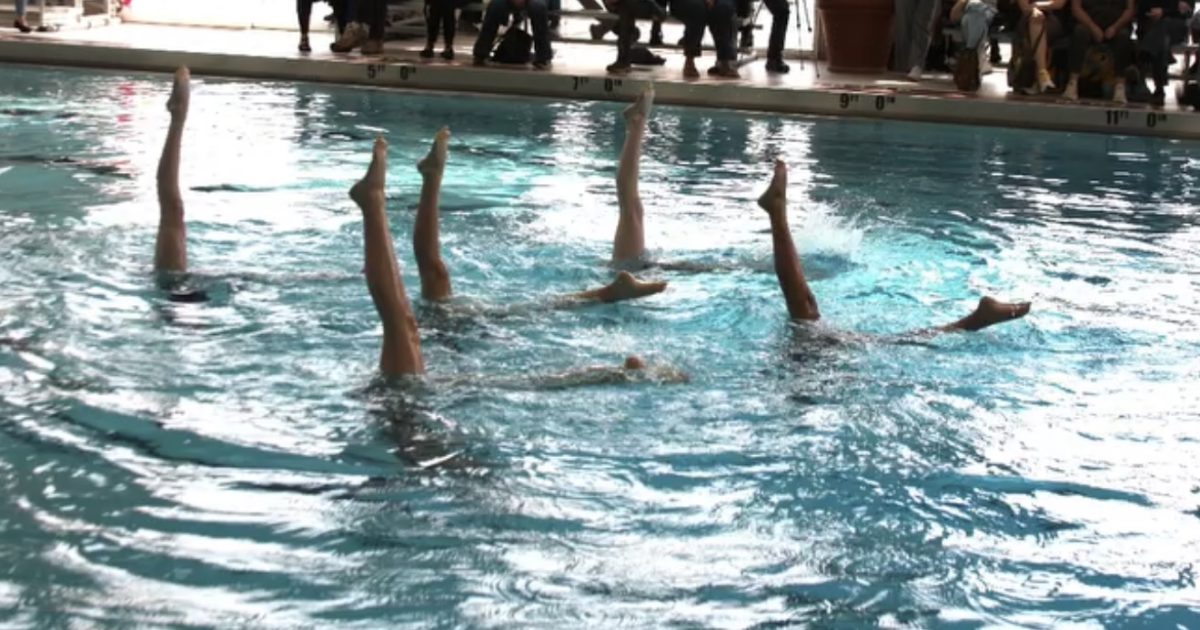





































The Brecksville Blue Dolphins have officially started up their season. Each year, the team improves their skills, builds closer bonds, recruit new members, and create new routines. Due to their consistent effort, they are presented with bigger, longer, and harder routines every year. Just last year, the team qualified seven members for Junior Olympics, a national level competition for all age group swimmers. They also had ten East Zone champions, which is a semi-national level competition for intermediate swimmers. But this raises a question: How were they able to do it?
Just over 2 years ago, the team welcomed a new coach, Coach Lauren Gaugler. The new coaching system created a huge setback for the team, as the team members weren’t used to this new style of coaching. Autumn Claridge, a nine year member of the team said, “Endurance was a struggle for me, but then Coach Lauren helped my endurance get better. I was pretty excited because she was nice, but also a good coach and she helped us improve a lot.”
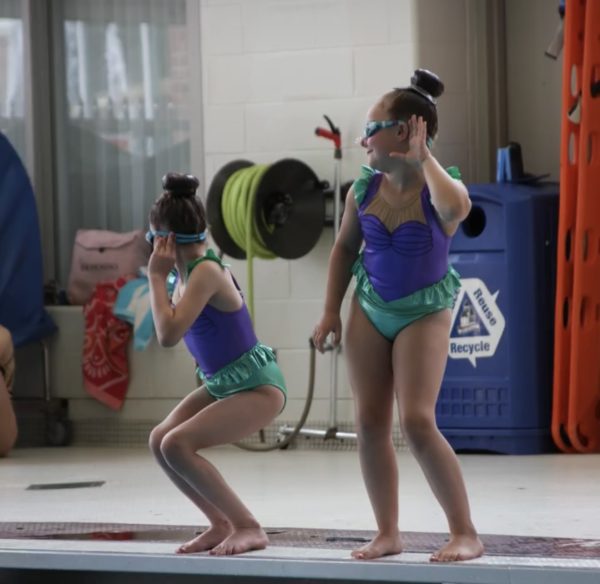
Coach Lauren Gaugler wasn’t the only new coach to join the team. In just under a year, Coach Jessica Baako had also joined the team, along with the newest addition to the team, Coach Amy.
Each and every one of the coaches has a specific job to do. The head coach, Lauren Gaugler, focuses on the water and gives corrections to all the swimmers. She also organises all the meets, and keeps the team together. The assistant coach, Jessica Baako, helps the swimmers with on-land practice, and she helps Gaugler with organizing the meets and competitions.
The Coaching philosophy is something different than what most people think. Gaugler said, “I would say that my philosophy, in general, is to create an environment where all athletes feel supported and cared for; [but I also want] to create a rigor to practice that leads to improvement. I hope that the athletes feel supported, but also feel that they are accomplishing something.”
Teamwork is a key factor in the sport of synchronized swimming. If one person on the team feels out of place or alone, it can create future problems that can translate into the routine. It is important for the coach to keep a strong bond among team members. Gaugler explains how she does it. She says, “Well, team dinners are super important to me and staying at the hotel is super important to me. I think that having the experience with your friends at meets where we are sharing meals together and sleeping at the same hotel and traveling together just really facilitates team bonding. And I think that that is just super key,”
Teamwork also translates into team culture. Good teamwork, not only keeps the team together, but it also keeps the culture lively. Gaugler said, “I hope that it’s positive. I think that in general, most of the girls get along pretty well. I think that there are definitely small clicks, but I think as a whole, we are cohesive. Something that I would like to see is more integration between the younger girls and the older girls.”
A typical training day for these swimmers isn’t what most think. “Monday, Wednesday, Friday, and Saturday, I swim and lift for the swim team, and then, Tuesday and Thursday I have a workout for 30 minutes and practice for 2 hours for Synchro.” said Sarah Poelking, a seven year member of the team.
Each of the team members constantly put effort into each and every single one of their practices, improving on their skills. However, members of the team still have problems to face.
For some of the members, keeping a good headspace at meets can be a struggle for them. For others, the hybrids in the middle of the routine can be their own struggle. Nevertheless, they still are able to get through it. Lillee Khandelwal, a five year member of the team said, “The hardest part for me is the hybrids. I’m not great at holding my breath and getting high. I also have trouble completing all my spins. To help with that, I can ask Coach to specialize in hybrids that practice or do extra lessons.”
On top of that, some of the members have their very own goals for the upcoming season, so they are able to perform to the best of their abilities. “To keep a positive attitude, “ said Poelking, “Learn stuff faster, and not get freaked out at meets,”
The swimmers having goals for themselves throughout the season, it allows the swimmer and the team to enhance their skills.
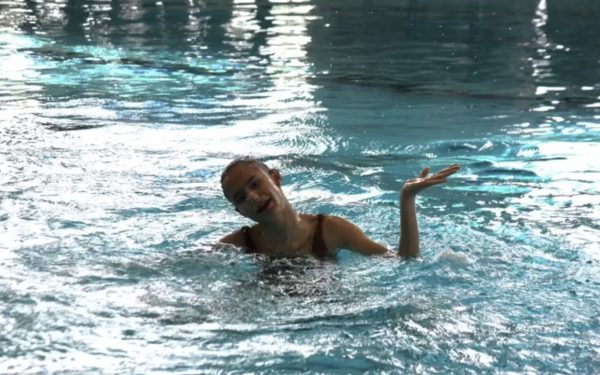
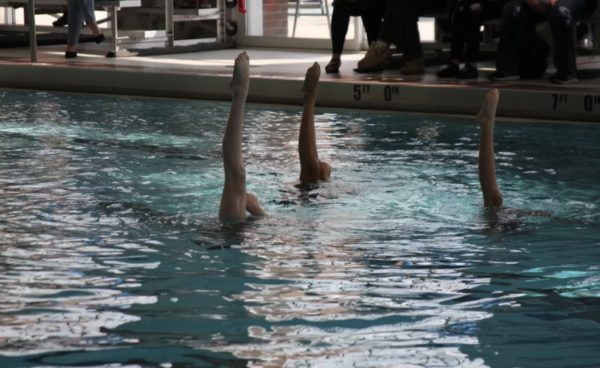
For each of the swimmers, they face their problems head on, and always strive for improvement. They create goals for themselves to help improve on all of their skills and moves they have to make in the water. Even though the swimmers have unchanging determination to get better and better with each of their skills, each of the team members can bond over their favorite move: lifts. Khandelwal said, “I like doing the lifts, with the whole team working together, I think it’s really fun,”
Behind each and every great team, is a beginning story of how each member came to join the team. Claridge said, “I was really young and my mom had a friend whose daughter also did synchronized swimming, so then she signed me up for it.” All the swimmers bring something special to the team, and without the convincing of a parent, or the boredom of having too much freetime, the team wouldn’t be complete.
Throughout all of their years of swimming, beginning to present, they each have their own rewarding aspect for synchronized swimming. Khandelwal said, “It helps with a lot of school things, and it allows me to hold my breath for a long time. It’s also really fun. It’s pretty cool to be a sport that not everyone does, and is unique.”
However for Claridge, her most rewarding aspect for synchronized swimming is a little different. She says, “After the meet, even if we didn’t do well, [I like] being able to celebrate with my friends and team.”
The members of the team have out done themselves last season, and are on the path to improving significantly this season.
Advice from the swimmers, to future Synchronized Swimmers: