






































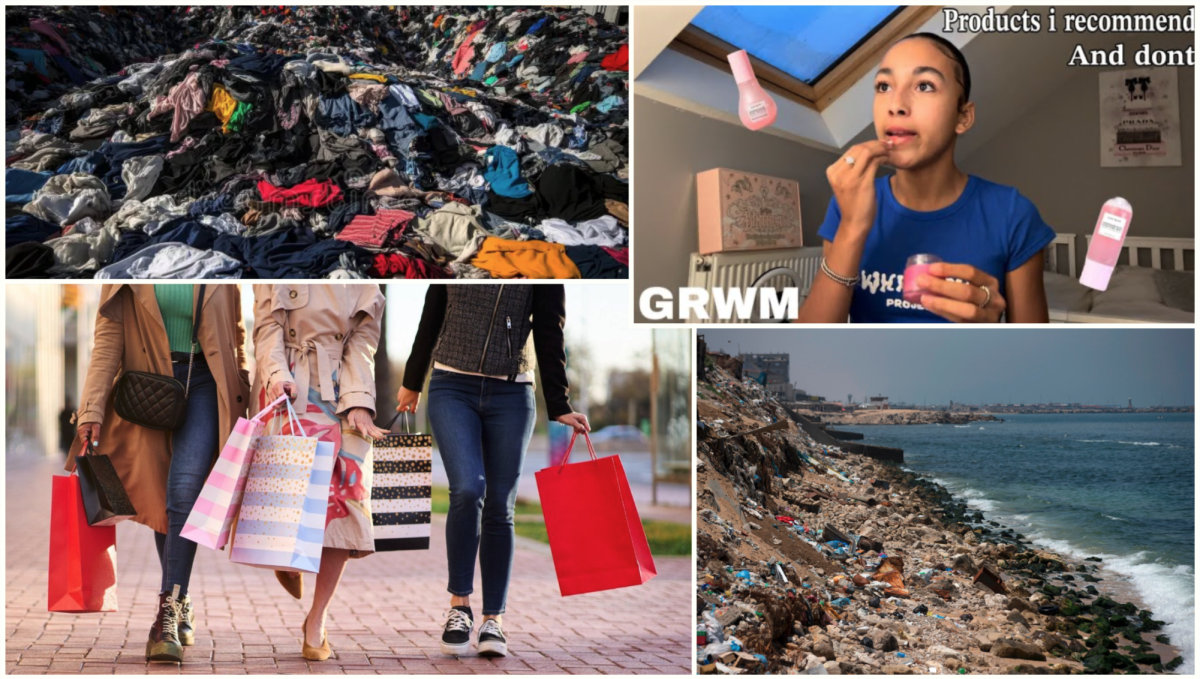

It is late at night after a long day of school. You have lost yourself in the trap of mindless doom scrolling. Every swipe brings a new influencer displaying a limited edition water bottle or a viral pair of leggings, maybe even a haul of clothes cheaper than lunch. It all seems harmless, gaining your attention as you seek to have more. But have you ever stopped to think about where these trends come from and where they eventually end up?
In an age of social media, trends explode and disappear faster than ever; however, their environmental and human impacts last far longer. Every day, millions around the world consume content through platforms such as TikTok or Instagram, which display new items and materials that catch the eye. These marketed items are often known as microtrends. They are fads that explode in popularity, usually fashion or materials that rise to fame only to lose it a short time later.
Some examples of microtrends include brands of water bottles, like the Owala. The Owala water bottle was marketed all over the internet. Many found themselves excitedly waiting for the best colors and collecting multiple. While the brand was notably known for many good features, including its design, its fame would only last for a short time. Many of those water bottles that people once dreamed of owning can now be found in the trash taken to landfills.
Overconsumption is the excessive use of resources, goods, and services beyond what is needed. For example, buying an excessive amount of clothing for personal desires instead of need.
According to Seth Millstein, out of all the human practices that are currently destroying the environment, overconsumption is one of the most significant causes. Despite playing a crucial role in environmental issues, people rarely speak of overconsumption.
Overconsumption has created a growing environmental crisis. The constant demand for new products requires massive amounts of electricity and resources to produce, which drives up CO₂ emissions through manufacturing, packaging, and global shipping.
Many order products on platforms such as Amazon, but they don’t question how products can get to their houses so quickly, and the environmental issues behind it. Many of these items are used briefly before being discarded. This practice adds to the overwhelming piles of waste that end up in landfills, intruding on natural habitats.
This kind of overconsumption intruding on habitats causes harm to both ecosystems and wildlife. The accumulation of materials invades not only land but also water habitats such as oceans, causing many issues. The global waste produced by overconsumption does not just disappear; instead, it adds pressure to fragile environments and communities already struggling to survive. Not only does overconsumption pose a massive threat to the environment, but also to the economic structure. Currently, the majority of countries around the world use a form of capitalism as an economic system.
Capitalism is a system where money is in control of the people instead of the government. People own the companies, produce products, and make money. As described by Lexie Woolums, an environmental activist, people around the world are so far disconnected from the places and communities that produce the products. People always want to have more than they already have, especially if they can get it cheaper.
What many don’t realize is that behind the product and price is the work that goes into making any given product. For many, looking for the lowest prices is where they choose to invest their money. While a $3 shirt at Target may seem like a nice, cheap steal, behind the scenes, it exploits workers through cheap labor. In fact, many companies have switched from producing products in America to producing in other areas, such as South Africa, to take advantage of labor laws.
This production is important to companies because it allows them to exploit workers in order to mass-produce products for little money. What many don’t realize is that clothing can not be made entirely without human labor or work. This means behind many cheap clothing items is an exploited worker who is paid barely anything for the company’s gain. This sort of labor is referred to as a common practice of modern slavery. According to the University of Alabama at Birmingham, Brands such as Zara and Forever 21 use cheap labor in the South in order to help maintain low prices in stores.
Another one of the countless examples is Shein. A company known for its low prices and accumulation of fast fashion microtrends. However, behind this popular site is cheap labor and child labor. Under an investigation, it was found that Shein workers are expected to work 18 hours a day with 1 day off per month. Despite working long arduous hours in terrible working conditions where they are exposed to toxic chemicals, workers only make as little as 4 cents per garment produced.
While the effects of overconsumption have been great, there is still action that can be taken. The primary action is to consider what you really need. Before being influenced by the internet and others, consider what you really need to purchase. In cases where you may need or want new clothes, consider thrifting. Instead of producing more, use the billions of pieces of clothing found in good condition in thrift stores to reuse and minimize impact.
As consumer culture grows, it is important to set boundaries and stop overconsumption because of not only its horrendous effects on the environment but also on cheap labor. The usage of overconsumption and cheap labor can easily corrupt economics and shape the way many live their lives.