









































The Grinch, Ebenezer Scrooge, and the Wet Bandits are all famous holiday antagonists that spark chaos and unhappiness everywhere they go, but none of them can compare to the horrors associated with the folkloric creature Krampus. The story, often told to spook children into being well-behaved, symbolizes centuries of German tradition that have been resurrected and reincorporated into society today. Krampus is not just a part of German tradition, but an influential figure world-wide and even at BBHCSD.
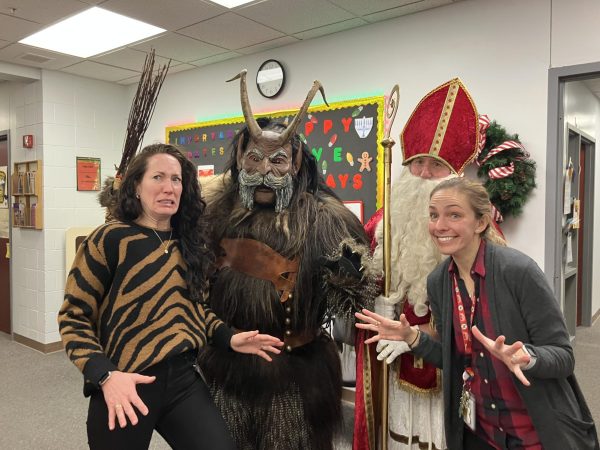
Every year students are amused, stunned, and/or scared by the wrath of Krampus as he visits and punishes children around Brecksville-Broadview Heights Middle School and High School. This year, Krampus visited the BBHHS on December 8, punishing naughty students and teachers all throughout the building. Even Joshua Backo, BBHHS assistant principal, was beaten for his mischievous actions.
Krampus is a half-goat, half-man creature with a long tongue, pointy horns, and sharp teeth. The name Krampus comes from the old German word, krampen, which means claw, so depictions of the figure will also have long, dark claws.
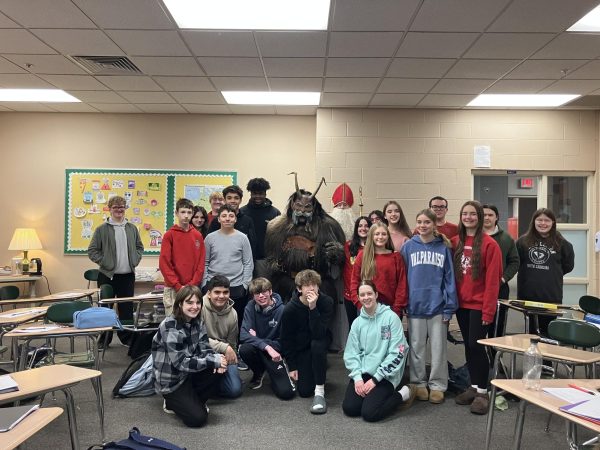
Christian versions of this story describe Krampus as a tamed companion of Saint Nicholas, who will accompany the saint as he travels around the world on December 5, giving small gifts and candies as rewards to well-behaved children. Jeff Moore, BBH German and English teacher, explains, “He[Saint Nicholas] had this helper, Krampus, who would be the yin to his yang, and would take care of scaring the children.” The naughty kids would either receive a swift beating with Krampus’s stick, a terrifying trip to hell in Krampus’s basket, or if they were unlucky enough, would be devoured by the creature.
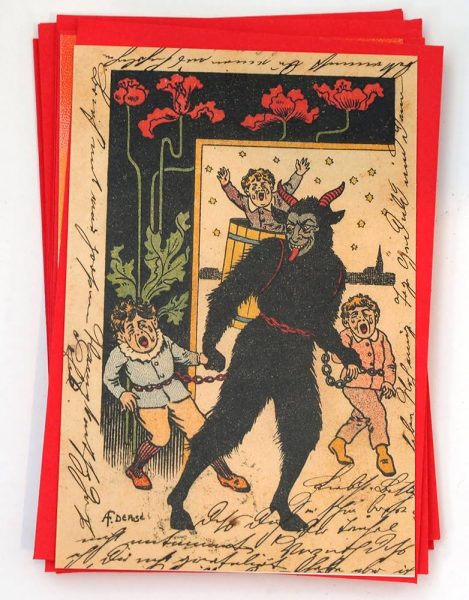
Krampus’s story originated in the alpine regions of Austria and Germany by Pagans. Since the Pagans passed traditions down verbally, Krampus’s representations and stories can be inconsistent. “I’m sure they used it as a way to explain what they couldn’t, or a way to keep the children good. Krampus will come get you and carry you away in a basket. That’s pretty scary stuff for a kid,” remarks Moore. Over time, the creature was incorporated into Christian culture where beliefs were much more documented. A prevalent custom around the holiday season was the exchange of Krampus greeting cards that put a darkly humorous twist on Christmas.
Michael Andrasi, BBHHS sophomore, discusses his traumatic experience when Krampus visited the middle school his eighth grade year. “It[Krampus] tapped on my shoulder and it told me to stand up. Then, it started hitting me with this weird piece of wheat and then I had to take a picture with it, smile, and act happy, as I was holding back tears of fear because it was so terrifying,” Andrasi recalls.
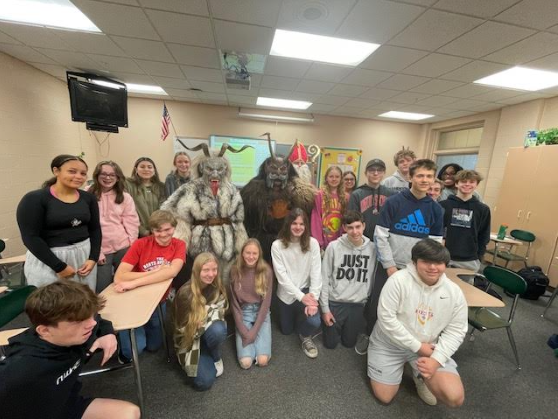
On the other hand, students like Lucas Patton, freshman and studier of German, believe that Krampus’s mischief was wildly entertaining. Patton mentions, “Getting whipped by Krampus was very fun.”
Many theories have circulated the school about who could possibly be under the bulky brown costume, but some have been debunked by his most recent visit. For example, Jordan Welch, BBHHS sophomore and German student, states confidently, “It’s either Herr (Mr.) Moore or Principal Jakub.” In reality, the people in charge of Krampus’s visits to the school are the directors of the Ohio Krampus Society, a non-profit organization that keeps the Krampus tradition alive and gives back to the community. This year, Ohio Krampus Society is collecting donations for W.A.G.S. 4 Kids, another non-profit that trains service animals for kids with disabilities.

Today, children like Welch still believe in Krampus. The creature is celebrated globally in an event called Krampuslauf, which means Krampus run. On December 5, krampusnacht (Krampus night), people line the streets waiting eagerly to be scared by one of the many Krampus-dressed paraders who will often chase after their victims. According to a video article produced by PBS, the people who craft Krampus masks and costumes are even honored and well-respected in their communities today.
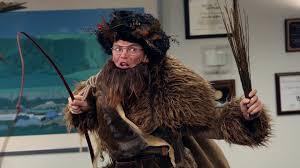
Not only is Krampus celebrated at festivals and events, but he has also become a pop culture icon. From horror movies to commercials, Krampus has made appearances all throughout the holidays. “The culture surrounding Krampus affects people in society through festivals, parades, movies, and the all around impact he has during the holiday season,” explains senior and German student, Elizabeth Fitzsimmons.
For example, Season 9 Episode 9 of The Office features Dwight, dressed as the character Belsnickel, another version of Krampus, who wanders around the building causing chaos. Another recent Krampus-inspired piece of content, was a commercial put out by Ocean Spray that features actor Bryan Cranston, as “Cranpus”, a spin-off of the original Krampus folkloric character.
The Krampus tradition began to be documented over four hundred years ago, truly demonstrating how beliefs can unite societies centuries later. If interested in helping support Krampus culture and supporting local communities, check out the Ohio Krampus Society page today!